
 English
 Slovenčina
 polski
 Magyar
History of town – (Spišská Stará Ves)
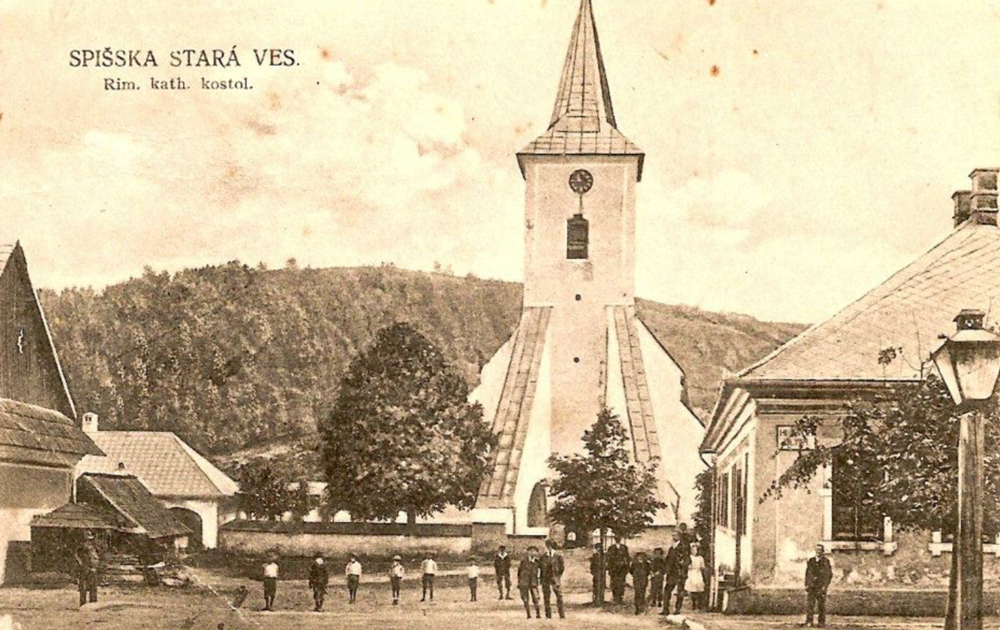
First written record of town dates back to 1309 (Latin name: Antiqua Villa). In all likelihood the town already existed before Tatar incursion in the 13th century. The settlement was dwelled in the 14th century during the colonization period of aristocrats from Brezovica. In 1337 the town was donated to Červený Kláštor and Lechnice Carthusians. It belonged to their successors until the 19th century.
Hungarian and Polish kings congregated here for peace proceedings several times throughout the history. Hungarian king Žigmund and Polish king Vladislav met here in 1423, as well as Hungarian king Matej Korvín and Kazimír Jagelovský in 1474.
The town was situated on an important merchant route; the regular Tuesday fairs took place here, the inhabitants were free from paying custom duties and tolls. In regard to that, the town received the liberties of squirearchal town with the rights to import, stock, and export beer, wine and other beverages. Later, still being a part of Hungarian Empire, it became the centre of the county.
It bested from Hussites, plagues, famines, and in the 16th and 17th century from fights between reformation and counter reformation. Spišská Stará Ves declined after 1920, when entire western part of the county accrued to Poland (14 boroughs). It remained the county until 1960, afterwards it was integrated into county of Poprad and later since 1997 the county of Kežmarok. Present shape of town was formed after a great fire in 1878.
Places of interest and position of town
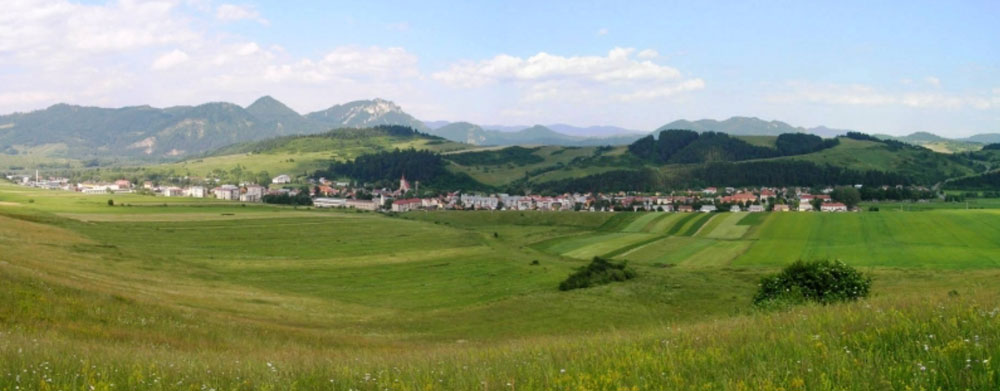
Town of Spišská Stará Ves is the third smallest town in Slovakia with population of 2300 inhabitants. Primary school, grammar school, and an art school can be found in town, just as well as the health care centre, town library, job centre, police station and the border crossing Lysá nad Dunajcom – town district of Spišská Stará Ves. The Roman Catholic Church of Virgin’s Mary Ascension, originally from the second half of the 14th century, rebuilt in baroque style in 1772, remains the most significant sacral monument. Its main late baroque altar traces back to 1765. The Chapel of The Holy Trinity, The Chapel of St. Fabian and Sebastian and The Chapel of Lord’s Transfiguration stretch back to the 18th century. The last mentioned was originally baroque-classicist building, but it was redesigned in neo-classicist style in 1860. Spišská Stará Ves is a convenient base for exploring of beauty and history of Zamagurie region. Nearby Červený Kláštor with its museum, traditional events, and Dunajec flatboat rafting belong to tempting tourist attractions. Well-known ski centre Spišské Hanušovce and Jezersko offer a good ski possibilities in the surroundings.

